SKU:
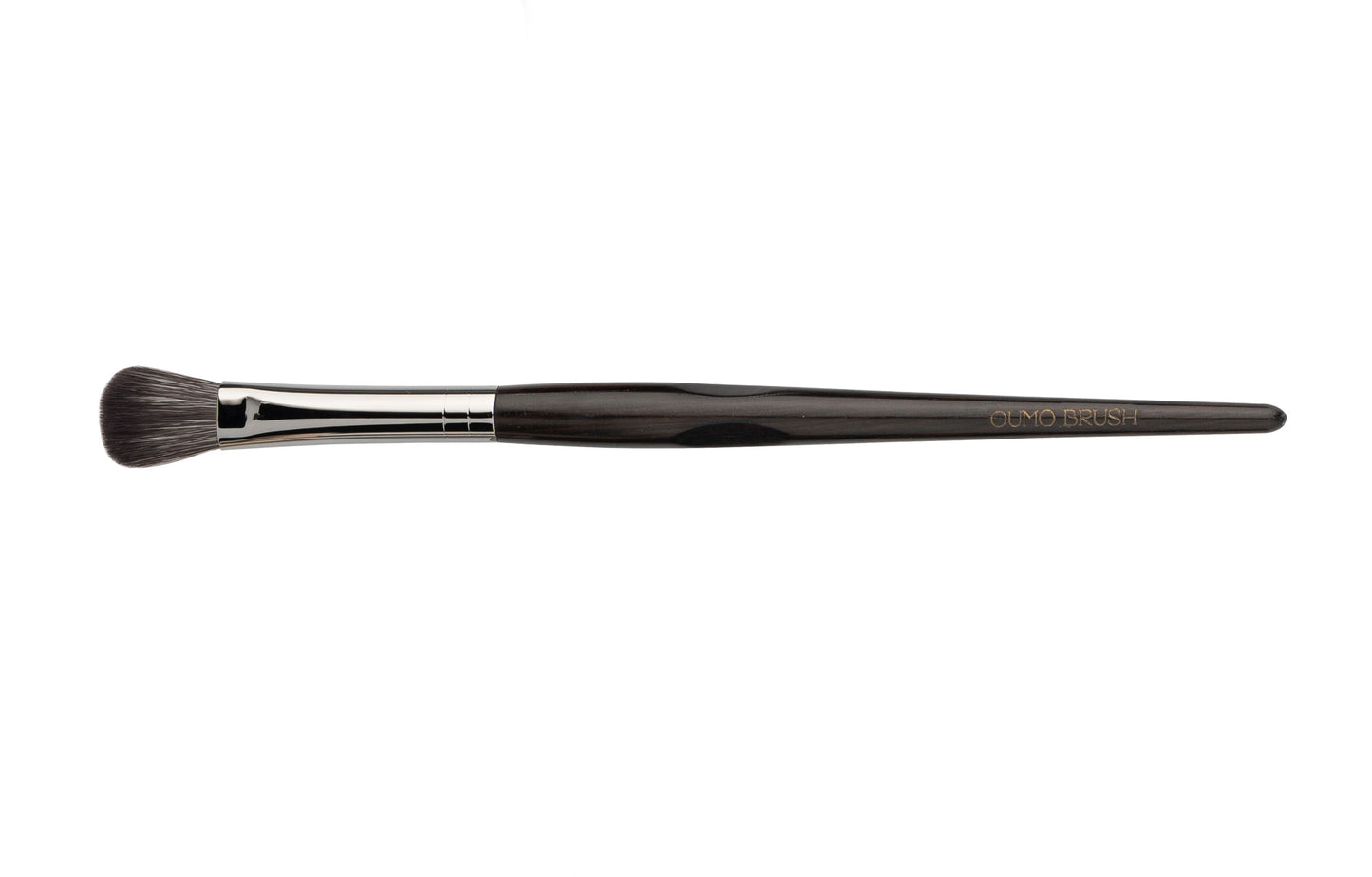
Black Eye Shadow Eyeshadow Color Spreading Application Blending Brush
Black Eye Shadow Eyeshadow Color Spreading Application Blending Brush
Couldn't load pickup availability
Product dimensions:
Brush head width 1.36cm
Brush head length 1.78cm
Tube length 3.99cm
Handle length 10.86cm
The Bristles — Premium Tapered Synthetic Fiber
Before a single fiber enters production, it's graded to a tolerance of ±5 microns in diameter. That level of consistency is why the brush fans out evenly, holds its dome shape wash after wash, and never develops the lopsided drift you've probably noticed in cheaper brushes.
Each individual fiber is then hand-sorted, oriented tip-up, and bundled into a dense knot — a process that takes trained hands, not a machine, because only a human touch can confirm that every tip is aligned before the bundle is locked in place. Once the knot is set, we inject cosmetic-grade epoxy adhesive deep into the ferrule cavity. This is the same class of adhesive used in medical-grade tool manufacturing: it cures hard, holds through repeated water and cleanser exposure, and produces zero off-gassing odor. Cheap brushes rely on EVA hot-melt glue — it's fast to apply and falls apart in warm water. We don't use it anywhere in this set.
After curing, every brush head passes a shedding stress test — a mechanical simulation of repeated application and washing cycles — before it's approved for assembly. Zero shedding tolerance. If it sheds in the test, it never reaches you.
This is your primary lid brush — the one that picks up color from the pan and puts it exactly where you point it. We made the bristle profile flat and slightly padded: flat enough to deliver a clean, defined deposit on the lid, padded enough that the color softens at its boundary without needing a separate blending brush for every shadow you lay down.
The fiber diameter on this brush runs at the finer end of our tapered synthetic range. Why does that matter for an eyeshadow brush? Because the finer the tip, the more surface area the fiber presents to the shadow pan — which means better pigment pickup on a single press, and truer color payoff on the lid. With coarser synthetic fiber, you press the brush into a vibrant burgundy and the lid gets a washed-out approximation of it. With these fibers, what's in the pan is what lands on your eye.
The knot is hand-built to a consistent density that gives the brush just enough spring to bounce back to its flat profile after each press, so your 50th application looks identical to your first.
The Ferrule — Solid Copper, Nickel-Electroplated
Most ferrules in the market are aluminum. Ours are solid copper. This is not a cosmetic choice.
| Our Copper Ferrule | Typical Aluminum Ferrule | |
| Hardness | ~3–10× harder than aluminum | Soft; deforms under pressure |
| Density | 8.96 g/cm³ — satisfying weight in hand | 2.7 g/cm³ — lightweight, cheap feel |
| Corrosion resistance | Copper base + nickel plating = multi-layer protection | Anodized surface only; grays over time |
| Crimp precision | Seamless, high-force double crimp achievable | Prone to cracking under high crimp force |
| Surface finish | Mirror-bright after nickel plating | Dull matte or painted |
Here's how the copper gets its armor. After the tube is formed and shaped, it enters a multi-stage electroplating line. First, the raw copper surface is degreased and acid-activated — two steps most budget manufacturers skip, and the reason their plating peels. Then a base copper strike layer is deposited, giving the subsequent nickel layer a molecularly bonded foundation to grip. The nickel plating itself is applied at a controlled thickness of 5–15 microns, forming a dense, corrosion-resistant shell. The outermost layer — a bright chrome or gold finish — is what you see and feel: hard, reflective, and immune to the tarnishing that makes aluminum ferrules look cheap within months.
Once the bristle knot is set inside the ferrule, the tube is double-crimped: two precisely aligned compression passes on opposite sides of the ferrule, creating a mechanical lock around the hair bundle that glue alone could never achieve. Then, the joint between the ferrule and the handle is sealed with structural epoxy resin — a physical waterproof barrier that stops wash water from wicking into the wood and causing the handle swelling and cracking that ruins so many "premium" brushes.
The Handle — Solid Ebony Wood
We use ebony. Not ebony-finish. Not ebony-stained beech. Solid ebony — one of the densest, hardest, and most storied woods on earth.
| Ebony (Diospyros spp.) | Common Beech Handle | |
| Janka Hardness | 3,220 lbf | ~1,300 lbf |
| Density | 1,089 kg/m³ | ~720 kg/m³ |
| Sinks in water? | Yes — denser than water | No |
| Natural color | Deep black from within the heartwood | Pale; requires dyeing |
| Surface pores | Extremely tight; near-zero grain pores | Visible grain; requires lacquer to seal |
| Natural antimicrobial | High tannin content; naturally inhibits bacteria | Requires treatment |
Ebony is hard enough that it dulls the CNC cutting tools that shape it — which is why most manufacturers don't bother. We do, because nothing else handles the way ebony handles. Its density of 1,089 kg/m³ means it is literally heavier than water — drop a piece into a glass and it sinks. That same density is what gives this handle its distinctive heft: not heavy enough to fatigue your hand, but substantial enough to tell you, the moment you pick it up, that this is not a toy.
The color is not dye. It is the heartwood of the tree — the oldest, most compressed rings at the core, black because of centuries of mineral and tannin accumulation. A beech handle stained black will fade and streak at the edges within months of regular washing. This handle won't. The color goes all the way through.
Every blank is CNC-turned to a diameter tolerance of ±0.1 mm so it fits the copper ferrule with zero play, then hand-sanded through progressive grits — 120, 240, 400, and finally 800 — until the surface reaches a near-glassy smoothness without a single coat of lacquer. Each finished handle is individually weighed; any piece outside our weight specification is rejected. The result is a set of 17 brushes that feel identical in the hand, because they are.
How It All Comes Together
The bristle knot is set in the ferrule. The ferrule is crimped, glued, and sealed onto the handle. The finished brush is weighed, measured, and stress-tested. Only then does it leave the factory.
Best For: Eyeshadow base, lid color deposit, cut crease prep, shimmer packing
Share